POLICY
US rules keep the newest AI models from Anthropic and OpenAI offline
What happened? On June 9, Anthropic released two new AI models:
Claude Fable 5, a public version, and Claude Mythos 5, the same model without its safety
filters, for approved security firms only. On June 12, the US government issued an export
rule — a limit on who outside the US can use certain technology — that blocked anyone who is
not a US citizen. Anthropic could not block only those users, so it took both models offline
for everyone. On June 26, the Commerce Department let Mythos 5 return for about 100 approved
US organizations, according to a government letter reported by Bloomberg, CNN and others. As
of today, the public model, Fable 5, is still offline, though news reports say its return may
be only days away.
Tell me more: The government gave no official reason. Anthropic said
the likely cause was a report that someone had found a way around Fable 5's safety filters,
which it disputes. Other reasons have been reported, none official. The same week, OpenAI ran
into a similar limit: on June 26 it previewed its next models, called GPT-5.6, but let only a
small group of approved partners use them, again at the government's request. OpenAI says a
wider release will come "in the coming weeks." Both moves point to a new pattern — the US
government now has a say in when the most powerful AI models reach the public.
Sources:
Anthropic statement ·
Axios (Jun 27) ·
OpenAI on GPT-5.6
SELF-DRIVING CARS
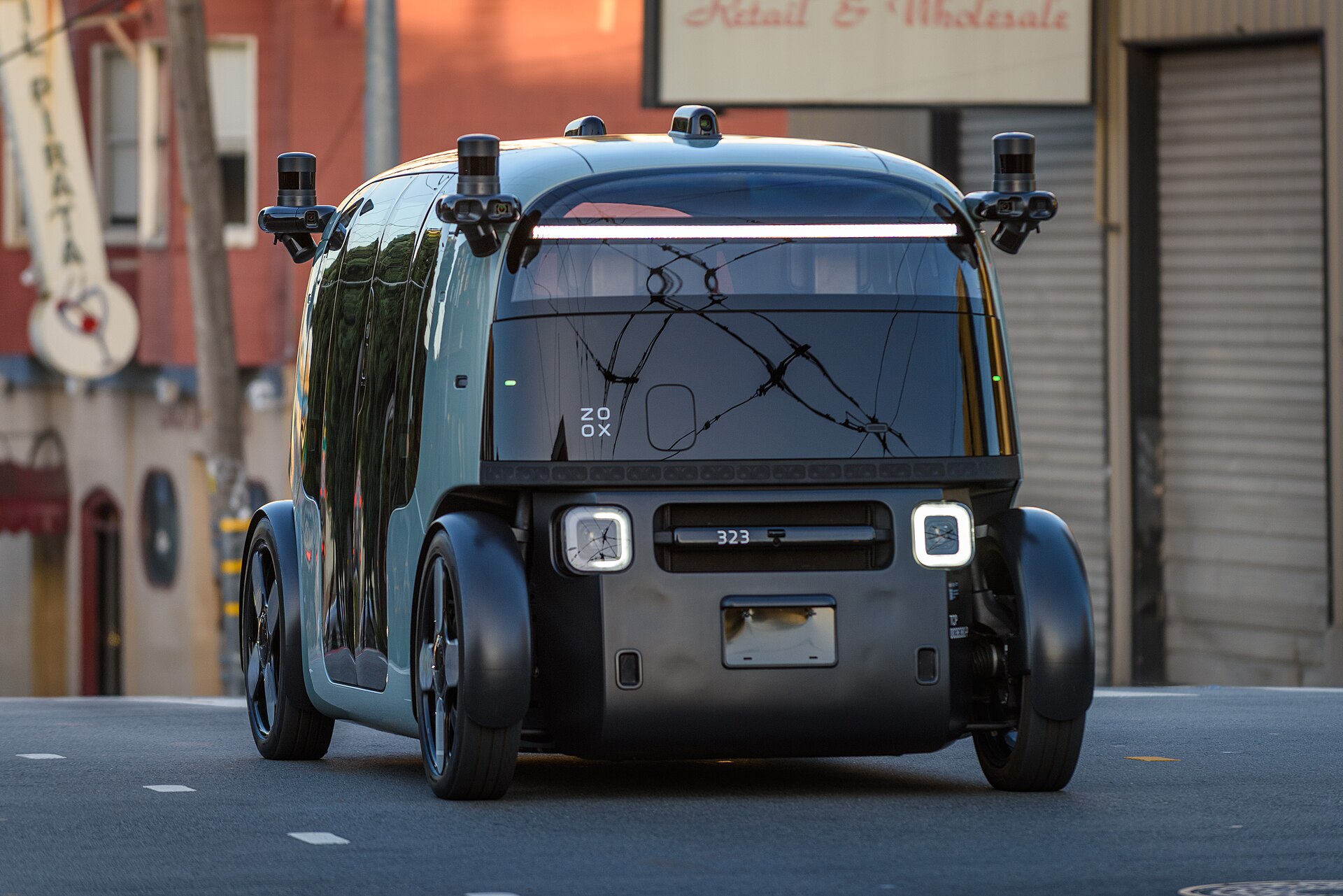
Amazon's Zoox unveils a robotaxi with no steering wheel and plans to start charging
What happened? On June 24, Amazon's self-driving car company, Zoox,
unveiled a new version of its robotaxi. The car has no steering wheel and no pedals, and the
seats face inward, so riders sit looking at each other. Zoox already offers free rides in
parts of Las Vegas and San Francisco, with limited testing in Miami and Austin. It now says it
plans to start charging for rides later this year. To grow beyond that, Zoox still needs
approval from US regulators — the NHTSA, which oversees vehicle safety — to run as many as
2,500 of the cars.
Tell me more: Robotaxis are slowly moving from free tests to paid
service. Zoox's main rival, Waymo, part of Google's parent company, already runs a paid
robotaxi service in several US cities. Zoox is trying to catch up with a car built from the
ground up for self-driving, rather than a normal car fitted with sensors. For now, the new
vehicle is mostly a preview — it cannot expand to thousands of cars until regulators approve
its request, and that decision is still pending.
Source:
CNBC (Jun 24)
BUSINESS
OpenAI may wait until 2027 to go public, holding out for a $1 trillion price
What happened? On June 25 and 26, Bloomberg and The New York Times
reported that OpenAI is leaning toward waiting until 2027 to sell shares to the public, rather
than doing it sooner for less money. The reports say chief executive Sam Altman wants the
company valued at around $1 trillion and will not accept a lower figure. Advisers reportedly
urged caution after SpaceX saw its shares wobble following its own recent stock-market debut.
OpenAI has not confirmed any of this on the record.
Tell me more: The report fed a wider debate this year over whether
the AI boom is a bubble. Some analysts warn AI companies are valued far above what their
earnings can justify; others say the technology is still early and the spending will pay off.
A $1 trillion valuation would make OpenAI one of the most valuable companies ever to go public.
For now it is a plan, not a decision — no date and no final price are set.
Sources:
Bloomberg (Jun 25) ·
CNBC (Jun 26)
.jpg)